
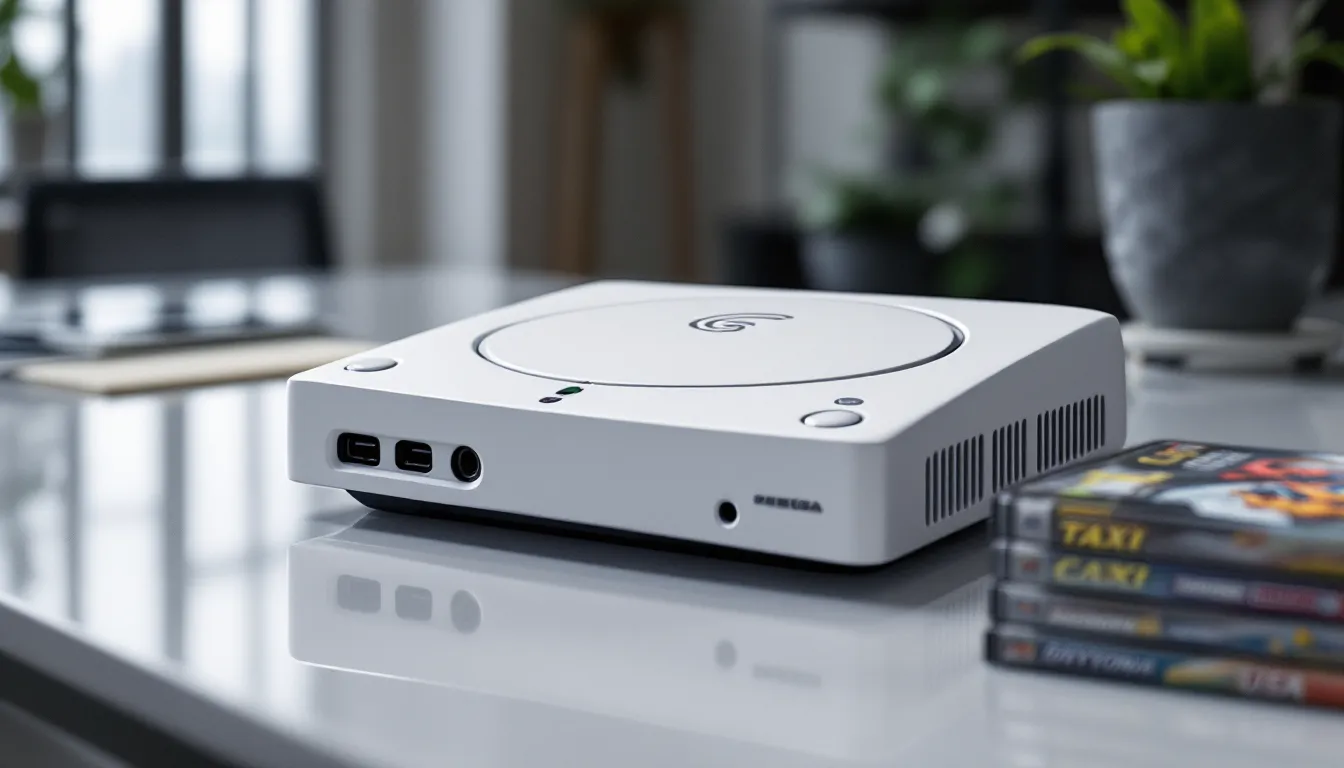

Sega’s Dreamcast had a tragically short lifespan, just over two years in North America, but it left behind a racing game library that still holds up today. While Sony’s PlayStation 2 dominated the market and Microsoft prepared to enter with the Xbox, the Dreamcast quietly built one of the most diverse and innovative racing catalogs of its generation. From arcade-perfect ports to ambitious simulations, Sega’s final console delivered speed, style, and some genuinely forward-thinking features that wouldn’t become standard until years later.
The Dreamcast’s racing lineup wasn’t just about quantity. It offered genuine variety: frantic cab-driving chaos, midnight highway battles on Japanese expressways, endurance racing simulations, and arcade classics that felt ripped straight from the coin-op machines. These weren’t cookie-cutter experiences, each title brought something distinct to the table, whether it was innovative online multiplayer, VMU integration, or graphics that pushed the hardware to its limits.
For retro gaming enthusiasts and racing fans curious about what made this console special, understanding its racing library is essential. Let’s break down why the Dreamcast became a haven for speed junkies and which titles still deserve attention nearly two decades after the console’s discontinuation.
Key Takeaways
- Dreamcast racing games pioneered online multiplayer features like leaderboards and ghost data sharing years before they became industry standard.
- The console’s PowerVR2 GPU delivered 60fps performance and superior graphics quality that gave Dreamcast racing games a responsive, visually crisp advantage over competing platforms.
- Dreamcast racing games embraced both arcade accessibility and simulation depth, with titles like Metropolis Street Racer introducing the Kudos style-based scoring system that directly influenced Project Gotham Racing and modern racing franchises.
- Unique features like VMU integration and NAOMI arcade-to-console ports enabled Dreamcast racing games to offer experiences unavailable elsewhere, from real-time in-race displays to virtually identical arcade conversions.
- Franchises including Forza Horizon, Burnout, and Initial D all trace their design foundations back to innovations pioneered by Dreamcast racing games, cementing the console’s lasting legacy in modern racing game design.
Why the Dreamcast Was a Racing Game Powerhouse
The Dreamcast wasn’t just another console, it was built with arcade DNA running through its veins. Sega had decades of experience crafting coin-op racing experiences, and they poured that knowledge into hardware specifically designed to bring those games home without compromise.
The Arcade-Perfect Hardware Advantage
Sega designed the Dreamcast around the NAOMI arcade board, which shared nearly identical architecture with the home console. This wasn’t a coincidence. Arcade developers could port their games to Dreamcast with minimal effort, resulting in conversions that maintained the original frame rates, physics, and visual fidelity. Games like Daytona USA and Crazy Taxi weren’t just “based on” their arcade counterparts, they were virtually identical experiences.
The PowerVR2 GPU delivered impressive polygon counts and texture filtering that gave racing games a smooth, clean look. Where the PlayStation struggled with warping textures and the Nintendo 64 dealt with fog and blurriness, the Dreamcast rendered crisp visuals at a consistent 60fps in many titles. This made a massive difference in racing games, where split-second reactions depend on visual clarity.
The console’s 128-bit architecture allowed for more detailed car models, more complex track environments, and better lighting effects than its competitors. Racing games particularly benefited from this horsepower, reflections on car bodies looked convincing, environments featured more trackside detail, and weather effects added atmosphere without tanking performance.
Innovative Online Racing Features
The Dreamcast shipped with a 56k modem built in, a bold move in 1999 when console online gaming was practically nonexistent. Sega wasn’t just experimenting: they were committed to making online play a core feature. For racing games, this opened entirely new possibilities.
SegaNet launched in 2000, offering free online play (with ISP subscription). Racing titles like Metropolis Street Racer and the Tokyo Xtreme Racer series implemented online leaderboards, ghost data sharing, and even direct multiplayer races. While Xbox Live later refined the concept, Dreamcast pioneered these features in racing games years earlier.
The system also introduced downloadable content for racing games. Players could grab new paint schemes, updated leaderboards, and additional challenges through the modem, again, years before this became standard practice. It wasn’t always perfect (56k speeds were brutal), but the ambition was undeniable.
The Essential Dreamcast Racing Games You Must Play
These are the heavy hitters, the racing titles that defined the Dreamcast experience and still hold up as legitimately great games, not just nostalgic curiosities.
Crazy Taxi: The Arcade Classic That Defined a Generation
Crazy Taxi is pure, distilled chaos. The premise is simple: pick up fares, drive like a maniac, and deliver passengers before time runs out. The execution is what makes it legendary. Released in 2000 as a near-perfect port of Sega’s 1999 arcade hit, it captured everything that made the coin-op version addictive.
The game takes place in a condensed version of San Francisco, complete with cable cars and impossible hills. Players choose from four cabbies, each with slightly different handling characteristics, then spend 3-10 minutes (depending on mode) racking up fares through Crazy Drifts, Crazy Boosts, and Crazy Jumps. The physics are loose and forgiving, this isn’t a simulation. It’s about momentum, shortcuts, and threading between traffic at highway speeds.
What really sold the experience was the soundtrack. The Offspring and Bad Religion provided a punk rock backdrop that perfectly matched the game’s frantic energy. Combined with the constant barking of passengers yelling directions and the announcer screaming your earnings, it created an audiovisual assault that somehow never got old.
The Dreamcast version included the original arcade mode plus Crazy Box, a series of challenge missions that taught advanced techniques while testing player skill. Mastering the Crazy Drift, a specific technique combining brake, accelerator, and steering to maintain speed through turns, separated casual players from true cabbies. Understanding arcade racing mechanics became essential for high scores.
Metropolis Street Racer: The Spiritual Predecessor to Project Gotham Racing
Bizarre Creations’ Metropolis Street Racer (MSR) arrived in 2000 with massive ambition. It recreated real streets from London, Tokyo, and San Francisco with obsessive attention to detail, using GPS data and photographs to ensure accuracy. The time-of-day lighting system was groundbreaking, races took place at specific times, and the game calculated realistic sun positions and shadows based on actual geographic locations.
But MSR’s defining feature was Kudos, a points system that rewarded stylish driving. Clean overtakes, perfect racing lines, controlled drifts, and risky maneuvers all earned Kudos, while wall-scraping and sloppy driving subtracted points. You could win a race but lose the overall challenge if you drove poorly. This focus on technique rather than just finishing position became the foundation for the entire Project Gotham Racing series on Xbox.
The licensed car roster included over 25 vehicles from manufacturers like Ferrari, Lotus, TVR, and Dodge. Each car had distinct handling characteristics modeled with impressive accuracy for the era. The game demanded precision, tracks featured narrow city streets with tight corners, parked cars, and minimal margin for error.
MSR also pioneered the use of real-time clocks. The game synced with the Dreamcast’s internal clock, and some challenges were only available at specific times of day. This created a unique relationship between the player’s real-world schedule and the game’s content, a design choice rarely attempted since.
Daytona USA: Arcade Racing at Its Finest
Daytona USA needs no introduction to arcade veterans. Sega’s 1993 coin-op classic defined arcade racing for an entire generation, and the 2001 Dreamcast port finally brought the experience home without significant compromise.
The game featured three tracks: the Three-Seven Speedway, the figure-eight Dinosaur Canyon, and the technical Sea-Side Street Galaxy. Simple by modern standards, but the handling model made the difference. Cars felt weighty and responded to throttle control with nuance rare in arcade racers. Drafting actually mattered, and understanding when to feather the gas versus full throttle separated podium finishes from mid-pack mediocrity.
The Dreamcast version supported four-player local multiplayer and included the rarely-seen Championship Circuit Edition tracks as unlockables. The frame rate stayed locked at 60fps even in split-screen mode, maintaining that crucial responsive feel. The iconic soundtrack, particularly the absurdly catchy “Let’s Go Away”, returned in full glory, complete with the off-key enthusiasm that made it memorable.
What made Daytona special was the damage system and crash physics. Cars crumpled convincingly, losing performance as body panels flew off. Collisions had weight and consequence, encouraging clean racing while still allowing for spectacular pile-ups.
Sega GT: The Gran Turismo Competitor
Sega wanted their own answer to Sony’s simulation juggernaut, and Sega GT (2000) was their attempt. It featured over 130 licensed vehicles from 22 manufacturers, a career mode spanning multiple racing series, and a tuning system that let players adjust everything from gear ratios to suspension stiffness.
The career structure borrowed heavily from Gran Turismo: start with a modest budget, buy a used car, win races to earn credits, upgrade your ride, and gradually work up to exotic supercars. License tests taught racing fundamentals, and the AI provided decent competition across various difficulty levels.
Where Sega GT differentiated itself was in the handling model. It sat somewhere between arcade accessibility and full simulation, easier to pick up than Gran Turismo but more demanding than most other console racers. Cars had weight transfer and realistic braking zones, but the physics forgave minor mistakes that would’ve sent you spinning in Sony’s sim.
The game also featured impressive track variety, mixing real-world inspired circuits with fictional street courses. Weather effects and day/night cycles added strategic elements, and the garage mode let players view their collection in detail, rotating the camera around each vehicle.
Sega GT never quite reached Gran Turismo’s polish or sales, but it offered a credible alternative for Dreamcast owners craving simulation-style racing with classic racing game depth.
Hidden Gems and Underrated Dreamcast Racing Titles
Beyond the well-known releases, the Dreamcast racing library included several titles that flew under the radar but offered unique experiences worth exploring.
Tokyo Xtreme Racer Series: Midnight Highway Battles
The Tokyo Xtreme Racer series (known as Shutokou Battle in Japan) delivered something completely different: illegal street racing on accurate recreations of Tokyo’s highways. Released between 1999 and 2001 across multiple iterations, these games focused on one-on-one battles against rival racers on the Shuto Expressway network.
Instead of traditional laps and positions, races used a Spirit Points (SP) system. Each racer started with a full SP gauge, and staying behind your opponent drained your SP while they gained theirs. The goal was to break away and maintain your lead until the rival’s SP hit zero. It created tense cat-and-mouse dynamics where raw speed mattered less than consistency and racecraft.
The games featured massive rosters of rival racers, Tokyo Xtreme Racer 2 included over 250 unique opponents, each with specific cars, color schemes, and driving styles. Defeating rivals earned cash for car purchases and modifications. The tuning system was extensive, covering engine swaps, turbo upgrades, suspension geometry, and aerodynamic parts.
What really sold the atmosphere was the setting. Racing took place exclusively at night on empty (well, mostly empty) highways. The Tokyo skyline glowed in the distance, neon signs reflected off wet pavement, and the soundtrack provided ambient electronic beats that matched the late-night vibe perfectly.
The series also implemented early online features, including leaderboards and the ability to download ghost data of top players. According to reports on gaming culture sites, the Tokyo Xtreme Racer community remained active well after the Dreamcast’s discontinuation.
Le Mans 24 Hours: Endurance Racing Simulation
For players wanting serious simulation, Le Mans 24 Hours (2000) delivered. Licensed by the ACO (Automobile Club de l’Ouest), it faithfully recreated the legendary French endurance race with accuracy that impressed even hardcore sim racers.
The game included the complete Circuit de la Sarthe layout, all 8.45 miles of it, rendered with impressive detail. Landmarks like the Dunlop Bridge, Mulsanne Straight, and Porsche Curves were all present and correct. The car roster featured 30 vehicles across multiple classes: prototypes (LMP900, LMP675), GT cars, and production-based racers.
What set Le Mans apart was its commitment to endurance racing authenticity. Players managed fuel strategy, tire wear, and mechanical reliability over extended stints. The full 24-hour race was playable in real-time (though time compression options existed for sanity’s sake). Day-night transitions affected visibility and track temperature, influencing tire grip and car setup.
The physics engine modeled real-world handling characteristics with impressive fidelity. Each car class drove distinctly, lightweight prototypes were twitchy and aerodynamically sensitive, while GT cars offered more stability but less outright speed. Damage affected performance realistically, and mechanical failures could end races instantly if you pushed too hard.
Driver swaps during pit stops added another layer of strategy. In career mode, players managed a team, balancing between different drivers’ skill levels, fatigue, and salary demands. It was comprehensive simulation that didn’t compromise for accessibility.
Test Drive Series and Other Deep Cuts
Test Drive 6 and Test Drive Le Mans both appeared on Dreamcast, offering different takes on the franchise. Test Drive 6 focused on exotic car showdowns across closed courses, while Test Drive Le Mans (confusingly separate from the other Le Mans game) provided another endurance racing option with different licensing and physics.
Flag to Flag brought CART IndyCar racing to the console with mixed results. The handling was arcade-oriented even though the simulation subject matter, but it featured all the real 1999 season teams, drivers, and circuits. Split-screen multiplayer was solid, even if the single-player career felt thin.
Speed Devils deserves mention as a pure arcade racer with pickup weapons and outrageous track designs. It wasn’t trying to compete with simulations, instead, it offered chaotic multiplayer battles with power-ups, shortcuts, and rubber-band AI. The online mode supported up to four players via SegaNet, making it one of the earliest console racers with proper network play.
Even titles like San Francisco Rush 2049 and Hydro Thunder pushed the boundaries of what racing games could be, incorporating stunt mechanics and futuristic hydroplane combat respectively. The variety across the racing games category was genuinely impressive.
Arcade-Style vs. Simulation Racing on Dreamcast
The Dreamcast’s racing library split fairly evenly between arcade accessibility and simulation depth, offering something for every preference.
Arcade racers dominated the early library. Crazy Taxi, Daytona USA, Sega Rally 2, and Hydro Thunder prioritized immediate fun over realistic physics. These games featured forgiving handling, minimal punishment for crashes, and gameplay loops designed for quick sessions. Controls were responsive but simplified, gas, brake, drift, and maybe a boost or weapon button. The appeal was accessibility: anyone could pick up a controller and be competitive within minutes.
These titles typically ran at 60fps, maintained bright, vibrant visuals, and focused on replayability through score chasing and time trials. They descended directly from Sega’s arcade heritage, where games needed to hook players in seconds to earn quarters.
Simulation racers like Sega GT, Le Mans 24 Hours, and Metropolis Street Racer catered to players wanting depth and realism. These games modeled weight transfer, tire grip, and aerodynamics with varying degrees of accuracy. They demanded smooth inputs, proper braking points, and understanding of racing lines. Crashes had consequences, and competitive times required practice and car setup knowledge.
Simulations featured career modes with progression systems, extensive car rosters, and tuning options ranging from basic upgrades to detailed suspension geometry adjustments. They typically ran at 30fps to maintain visual detail and physics accuracy, trading the arcade racers’ silky smoothness for graphical fidelity.
The middle ground, games like MSR and the Tokyo Xtreme Racer series, proved most interesting. They incorporated simulation elements (realistic handling, car specifications, weather effects) while maintaining arcade accessibility (forgiving physics, shorter races, immediate gratification). This hybrid approach influenced countless later titles, from Project Gotham Racing to the modern Forza Horizon series.
Reviews on major gaming news outlets at the time praised the Dreamcast’s range, noting that competing consoles typically leaned heavily toward one style or the other. The variety meant the console could satisfy both casual players wanting quick thrills and dedicated enthusiasts seeking long-term engagement.
What Made Dreamcast Racing Games Stand Out From Competitors
Several technical and design advantages separated Dreamcast racing titles from what competitors offered during the same period.
Superior Graphics and Frame Rates
The PowerVR2 GPU excelled at specific rendering tasks that benefited racing games enormously. Texture filtering eliminated much of the shimmer and warping that plagued PlayStation titles, creating cleaner visuals especially on distant track sections. The hardware handled transparent effects efficiently, allowing for convincing glass reflections, heat haze, and spray effects without performance hits.
Many Dreamcast racers maintained 60fps even in demanding scenarios. Daytona USA, Sega Rally 2, and F355 Challenge all ran at this target frame rate, providing responsive controls and smooth visuals. This mattered significantly in racing games where timing inputs to visual feedback is crucial.
Anti-aliasing support (through VGA output) cleaned up jagged edges that were standard on console games of the era. When connected to a VGA monitor, Dreamcast racing games at 640×480 looked remarkably clean compared to the composite or S-video output common on PlayStations and N64s.
Polygon counts were higher than PlayStation could manage but more efficiently used than N64’s microcode approach. Car models featured rounder shapes and more detail, compare the boxy vehicles in Gran Turismo to the smoother models in Sega GT. Track environments included more background detail, better draw distances, and fewer instances of obvious pop-in.
The VMU Integration and Unique Features
The Visual Memory Unit (VMU), Sega’s memory card with a built-in screen and buttons, enabled features no other console racing games offered. The small LCD screen could display real-time information during races: current gear, lap times, position, or damage indicators. This meant players didn’t need to glance at on-screen HUDs, keeping their eyes focused on the track.
Several racing games used the VMU as a standalone mini-game device. Sega GT included a VMU racing game where players could raise and train AI drivers who would then compete in the main game while you were away. It was primitive but genuinely innovative.
The VMU also enabled data sharing between players without network connections. You could download your best lap ghosts to the VMU, take it to a friend’s house, and race against their ghosts on their console. This peer-to-peer sharing predated modern cloud saves and social features by years.
Some games like F355 Challenge used the VMU to store personalized car setups. You could bring your tuned configurations to arcade cabinets running compatible NAOMI versions, blending home and arcade play in ways that felt decades ahead of their time.
The four controller ports (standard on Dreamcast unlike PlayStation’s need for a multitap) made local multiplayer easier. Split-screen racing across titles like Speed Devils, Flag to Flag, and Daytona USA supported four players out of the box, turning living rooms into competitive arenas.
Playing Dreamcast Racing Games in 2026
Nearly 25 years after the Dreamcast’s discontinuation, playing these racing classics is still possible through multiple methods, each with tradeoffs.
Original Hardware vs. Emulation Options
Original Dreamcast hardware remains widely available on the secondhand market. Consoles typically sell for $80-150 USD depending on condition, with Japanese models often cheaper due to greater availability. The console’s build quality was decent, but the GD-ROM drives are aging and prone to failure. Laser assemblies can be replaced, but it requires technical skill.
For authentic play, original hardware offers the proper experience: no input lag, perfect compatibility, and the option to use period-correct CRT televisions for the intended visual presentation. VGA boxes (hardware adapters allowing 640×480 progressive scan output) are still available and dramatically improve image quality on modern displays.
The console’s region locking is easily bypassed using boot discs, allowing North American players to access the superior Japanese racing game library. Games like Tokyo Xtreme Racer and Initial D had Japan-exclusive releases that work perfectly on US consoles with this method.
Emulation has matured significantly. Redream and Flycast (formerly Reicast) both provide excellent Dreamcast emulation on PC, Android, and even some consoles. Performance on modern hardware is flawless, even budget PCs can run Dreamcast games at full speed with graphical enhancements.
Emulation advantages include:
- Internal resolution scaling (rendering games at 1080p or higher while maintaining original art)
- Save states for challenging sections
- Texture filtering improvements
- Fast-forward for grinding in career modes
- No worries about dying hardware
Downsides include occasional graphical glitches in specific titles, lack of VMU screen functionality, and potential input lag depending on setup. For racing games where frame-perfect timing matters, input lag can be a dealbreaker for competitive play.
FPGA solutions like the upcoming Dreamcast cores for MiSTer offer hardware-accurate emulation without software overhead. These recreate the console’s chips in programmable hardware, providing accuracy matching original consoles while enabling modern conveniences like HDMI output and save states.
Where to Find Dreamcast Racing Games Today
The secondhand market is the only legal option for physical copies. Common titles like Crazy Taxi and Sega GT typically sell for $15-30 USD, while rarer games like Metropolis Street Racer and Le Mans 24 Hours can reach $40-80 depending on condition and region.
eBay, local retro game stores, and marketplace sites all carry Dreamcast games, though prices have increased as retro collecting has grown. Japanese imports often cost less and are compatible with boot disc workarounds, Yahoo Auctions Japan (accessed through proxy services) offers significantly better prices than domestic US sellers.
Complete-in-box (CIB) copies command premium prices, but disc-only versions work identically and save money. Dreamcast games used standard jewel cases that crack easily, so finding pristine packaging is difficult and expensive.
For collectors seeking completeness, the Dreamcast racing library spans roughly 40-50 titles depending on how loosely you define “racing game” (do you count Hydro Thunder’s boat combat?) and whether you include region-exclusive releases. A complete collection represents a significant investment but covers incredible variety.
Digital preservation communities maintain compatibility lists and patches for rare titles, ensuring even obscure Japanese racers remain playable. The scene around retro gaming platforms continues supporting these classics decades after official support ended.
For modern gamers curious about the lineage of their favorite current-gen racing experiences, playing these Dreamcast titles reveals how many contemporary features, online leaderboards, Kudos-style scoring, open-world racing, have roots in Sega’s final console.
The Legacy and Influence of Dreamcast Racing Games
The Dreamcast’s racing library punched way above its weight, influencing game design for decades after the console’s demise.
Project Gotham Racing wouldn’t exist without Metropolis Street Racer. When Microsoft secured Bizarre Creations for Xbox exclusives, MSR’s Kudos system, real-world city recreations, and focus on style over pure speed became PGR’s foundation. The entire franchise, which sold millions and defined Xbox’s early racing identity, was essentially MSR’s spiritual successor with Microsoft money behind it.
Burnout’s Crash Mode and emphasis on spectacular destruction owed debts to the freedom Crazy Taxi demonstrated. Criterion’s developers cited the Dreamcast classic as inspiration for prioritizing moment-to-moment excitement over strict realism. The idea that racing games could be about more than just crossing finish lines first, that style, chaos, and personality mattered, traces directly back to Sega’s arcade ports.
The Forza Horizon series’ blend of simulation handling with arcade accessibility echoes the hybrid approach MSR pioneered. The skill-based scoring systems, dynamic time-of-day visuals, and focus on making simulation mechanics approachable to casual players all appeared first on Dreamcast.
Initial D: Arcade Stage and subsequent console releases built directly on Tokyo Xtreme Racer’s foundation. The highway battle system, extensive tuning options, and late-night street racing aesthetic all evolved from Genki’s Dreamcast series. Even modern titles like Wangan Midnight Maximum Tune maintain gameplay DNA from those early Shutokou Battle games.
Online racing features, leaderboards, ghost sharing, downloadable content, became standard because the Dreamcast proved they enhanced engagement. While Xbox Live refined the execution, Sega demonstrated the concept years earlier. Every time you download a livery or race against friends’ ghost laps, you’re using features the Dreamcast introduced to console racing.
The technical achievements mattered too. Sixty-fps racing became an expectation after Dreamcast titles proved it was achievable and made a tangible difference in feel. The VGA output option demonstrated console players cared about visual clarity, contributing to the industry’s eventual move toward HD standards.
Even failures left lessons. Sega GT showed that competing directly with Gran Turismo required either matching Polyphony’s obsessive detail or differentiating significantly, leading to later racing sims finding unique angles rather than attempting direct competition.
Preservation efforts keep these games relevant. Speedrunning communities still compete in Crazy Taxi and Daytona USA categories. Retro gaming content creators introduce new audiences to MSR’s innovations. The racing game genre’s family tree has Dreamcast roots throughout, even if younger players don’t realize it.
Conclusion
The Dreamcast’s racing library represented Sega at its creative peak, ambitious, innovative, and unafraid to experiment. From arcade-perfect ports that finally brought the coin-op experience home to forward-thinking titles that pioneered features still used today, these games proved that a console could fail commercially while succeeding artistically.
What made the Dreamcast racing collection special wasn’t just individual titles, though Crazy Taxi, MSR, and the Tokyo Xtreme Racer series would’ve been highlights on any platform. It was the sheer variety and willingness to try new concepts. Online racing when most players still used dial-up. Kudos systems rewarding style over speed. VMU integration that added functionality nobody asked for but some loved. Highway battles that created entire subgenres.
These weren’t just good games for their time, many remain genuinely excellent today. The 60fps arcade racers feel as responsive now as they did in 2000. MSR’s city recreations and Kudos scoring still impress. Even simulation titles like Le Mans 24 Hours offer depth that holds up against modern counterparts, if you can forgive the dated visuals.
For anyone exploring retro racing games or trying to understand where modern genre conventions originated, the Dreamcast library is essential. It captured a specific moment when arcades still influenced home gaming, when online features were experimental rather than expected, and when developers could take risks that might not have flown on more commercially successful platforms.
The console died young, but its racing legacy lives on every time you earn style points in a racing game, compete on real-world city streets, or share lap times with friends online. Sega’s speed legends deserve to be remembered, and played.